Commentary: Lancashire’s £1 Evening and Sunday Bus Fare Extension
Lancashire’s extension of the £1 evening and Sunday bus fare is welcome, but its long-term affordability should be tested through transparent mathematical modelling.
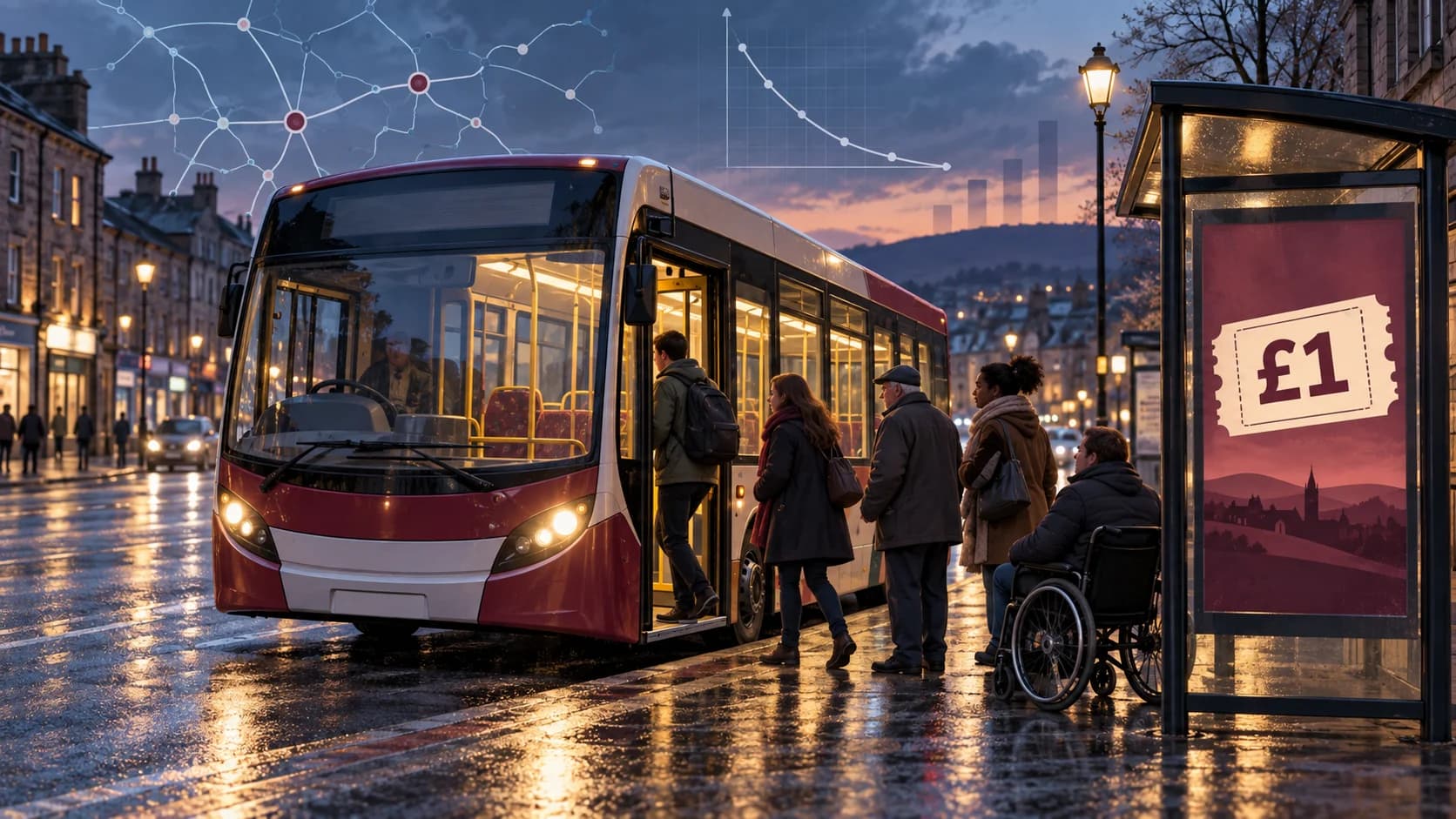
Lancashire’s decision to extend the £1 evening and Sunday bus fare until the end of 2026 is welcome news. A simple, affordable fare can make evening and Sunday travel more accessible for shift workers, students, families, and people on lower incomes, while also supporting local businesses and encouraging a shift from private cars to public transport. Maintaining the offer through the Christmas period also gives passengers a clear and consistent message at a time when household budgets remain under pressure.
However, this temporary extension does not remove the underlying financial concern. The gap between the £1 paid by passengers and the cost of providing the journey must ultimately be covered through operator revenue or public subsidy. A sustainable policy therefore needs to distinguish between genuinely additional journeys attracted by the lower fare and journeys that would have taken place anyway, while accounting for operating costs, reimbursement arrangements, differences between routes, and the wider social value created by affordable mobility. Without that evidence, a popular flat fare may become difficult to maintain or may divert limited funding from service frequency, coverage, and reliability.
This is where mathematical modelling should inform the next decision. A passenger-centred fare model could combine demand elasticity and travel-choice behaviour with operator costs, subsidy constraints, network coverage, and equity objectives. It could then compare the current £1 offer with alternatives such as targeted concessions, time-dependent fares, capped daily spending, or different reimbursement rules under the national £2 fare cap. The objective should not simply be to identify the cheapest fare, but to find the policy that delivers the greatest public value: affordable travel, financially viable services, increased ridership, and a stronger bus network over the long term.
Enjoyed this post?
Follow me on LinkedIn for more insights on public transport optimization and research updates.
Follow on LinkedIn